 Emily CarterDLL Errors
Introduction
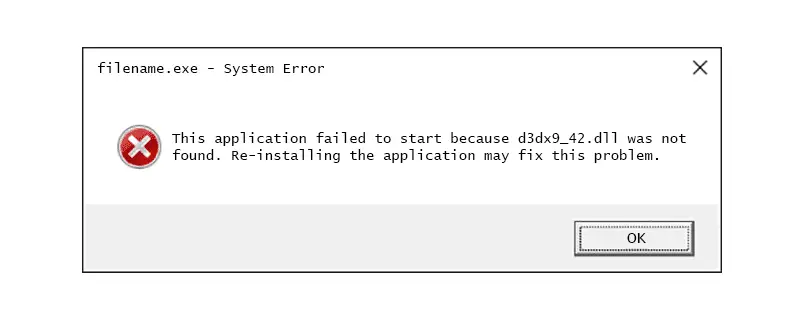
The “d3dx9_42.dll missing” message means that a Windows application cannot load the named DLL when it starts. The file may be missing, damaged, or incompatible with the application’s expected files. Start with the affected app’s own repair or reinstall process, then refresh Windows components. If several programs show DLL errors or the cause is unclear, use Fionn DLL Fixer to scan and repair related issues. This guide presents three practical methods and a verification check after each one.4
Prerequisites
- Use an administrator account when Windows requests permission.
- Record the application or game that displays the message.
- Close the affected application before changing files or settings.
Quick Method Comparison
| Method | Best For | Efficiency | User Effort |
|---|---|---|---|
| Repair or reinstall the affected app | One app or game fails | Often quick | Low to medium |
| Refresh Windows components | Errors began after updates or affect multiple apps | Moderate | Medium |
| Fionn DLL Fixer (Recommended) | Several DLL, dependency, or system issues | Streamlined scanning | Low |
Choose Method 1 when only one program is affected. Choose Method 2 when Windows itself appears unstable. Choose Method 3 when you need a broader scan or want a guided repair workflow.
Method 1: Repair or Reinstall the Affected App
When to use: The d3dx9_42.dll missing message appears only in one application, especially immediately after an incomplete update or installation.
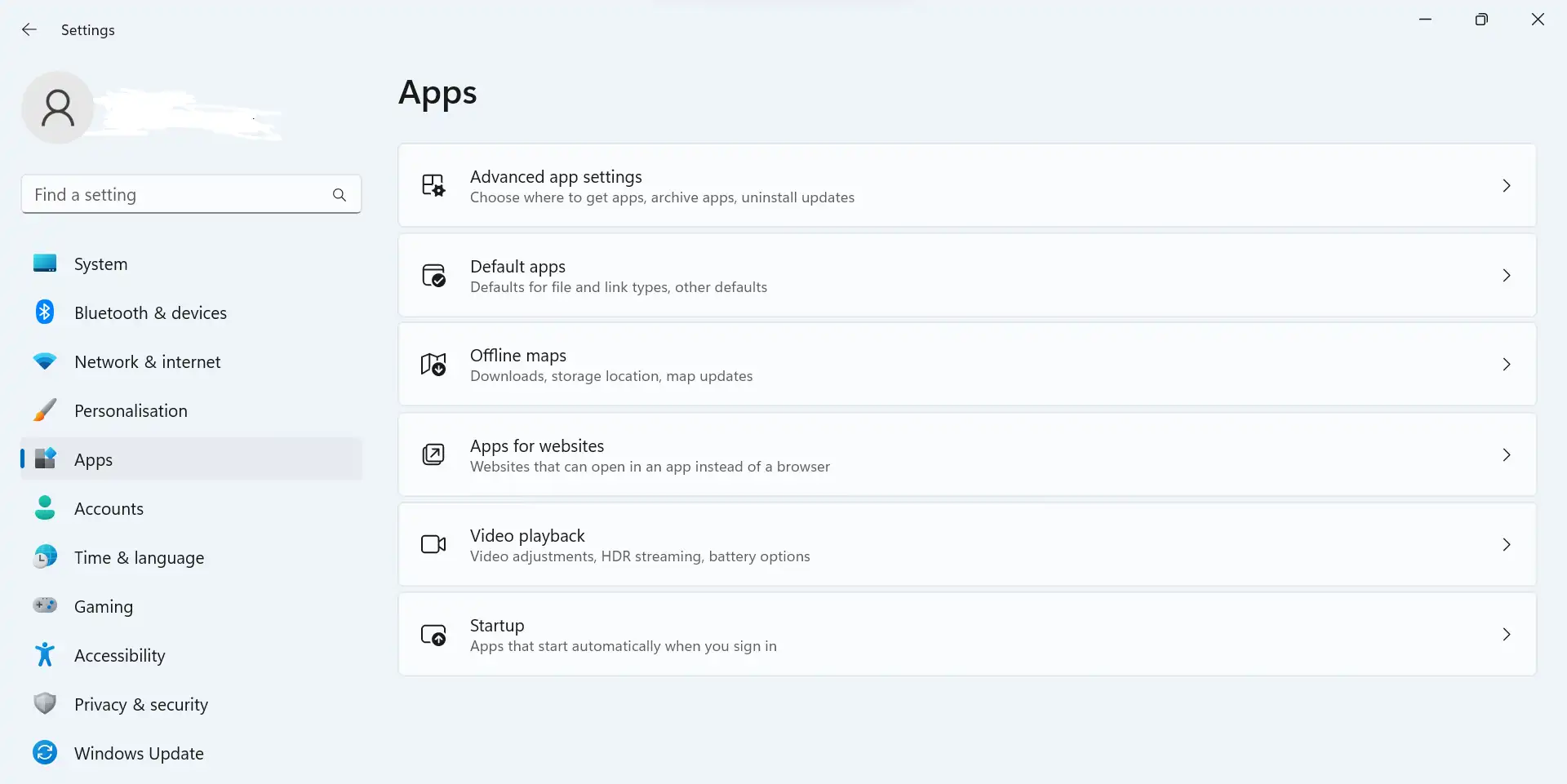
- Open
Settings, selectApps, and openInstalled apps. - Find the affected application, open its menu, and choose
Advanced optionswhen available. - Select
Repair, wait for Windows to finish, and launch the application again.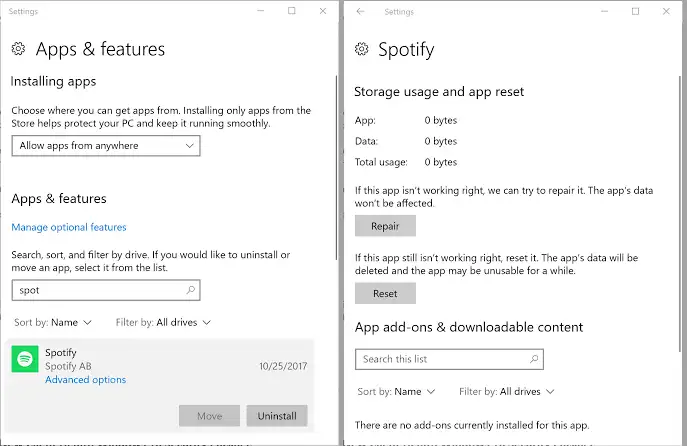
- If the error remains, uninstall the application from the same list.
- Restart Windows, then reinstall the application using its official installer or launcher.
Expected result: The application starts without requesting d3dx9_42.dll. If only this app still fails, its installer or bundled dependencies may be the remaining cause.
Method 2: Refresh Windows Components
When to use: Multiple applications show missing-DLL messages, or the problem started after a Windows change.
- Open
Settings > Windows Update. - Select
Check for updatesand install available updates. - Restart the computer after updates complete.
- Open the affected application and test the same action that produced the error.
Expected result: Windows and installed applications use the updated system state. If the same filename is still reported, continue with Method 3 or contact the application publisher.
Use this method as a system refresh, not as permission to copy DLL files from another computer. A file that looks identical may not match the application’s required version.
Method 3: Diagnose and Fix d3dx9_42.dll Missing with Fionn DLL Fixer
When to use: You see repeated DLL errors, dependency-loading failures, or cannot identify whether the issue is isolated to one application. Fionn DLL Fixer is a Windows desktop application that can scan for missing, damaged, version-mismatched, and System32-path-related DLL problems. It also checks DirectX DLL and D3D Runtime issues, which may help when the named file is part of a wider graphics dependency problem.
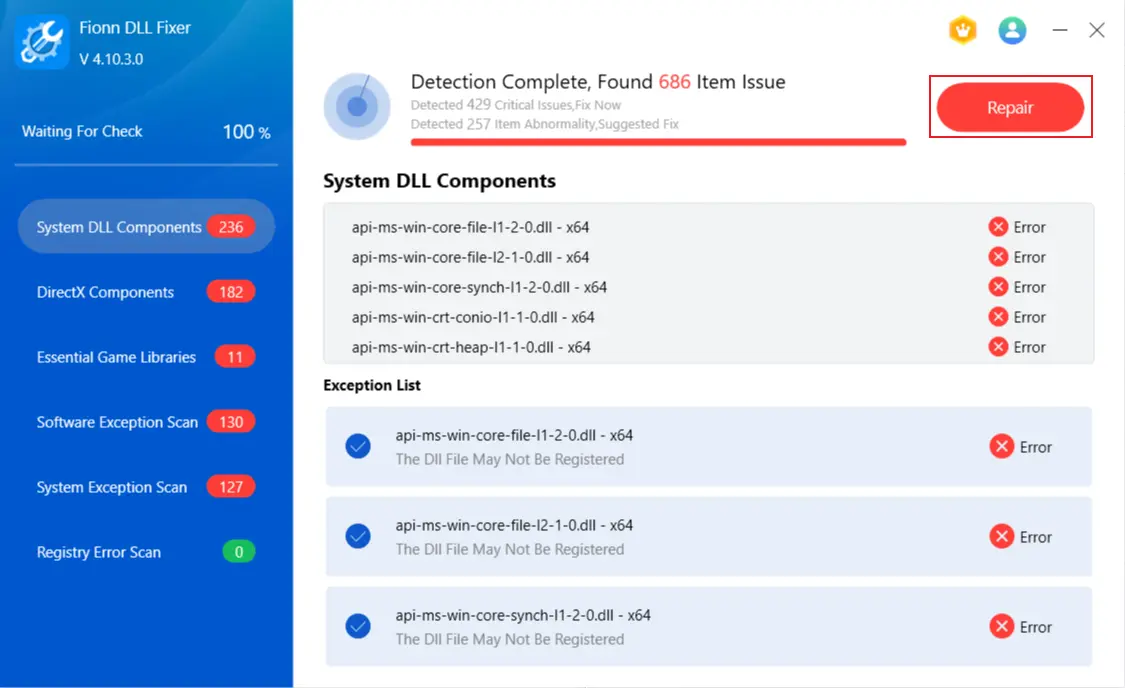
- Launch Fionn DLL Fixer. The software automatically scans your PC for DLL and system issues and displays the detected results when the scan is complete.
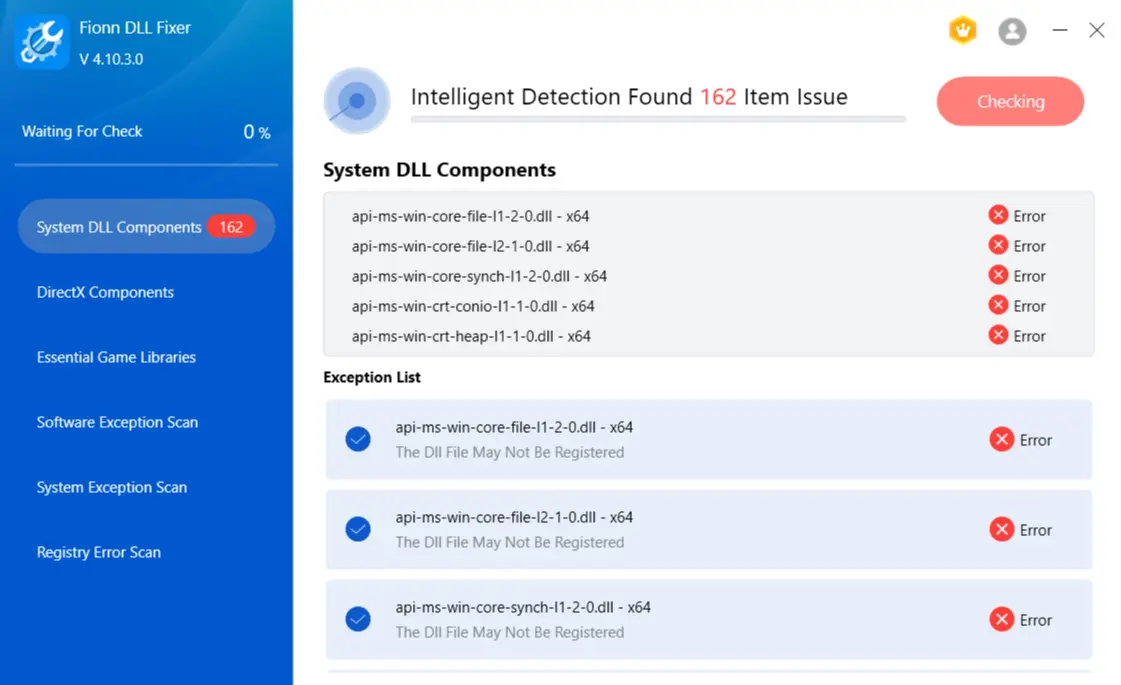
- After the scan finishes, click “Repair” to start fixing all detected DLL and system issues automatically.
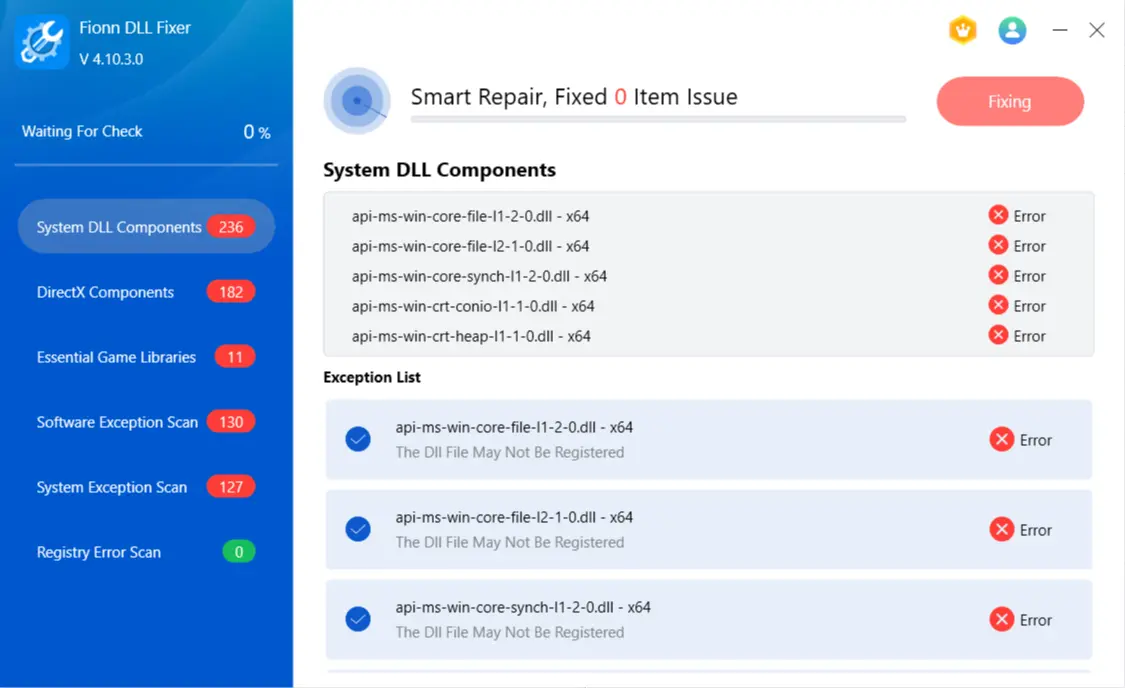
- Wait while the repair is in progress. During this process, the button changes to “Fixing” until all issues have been repaired.
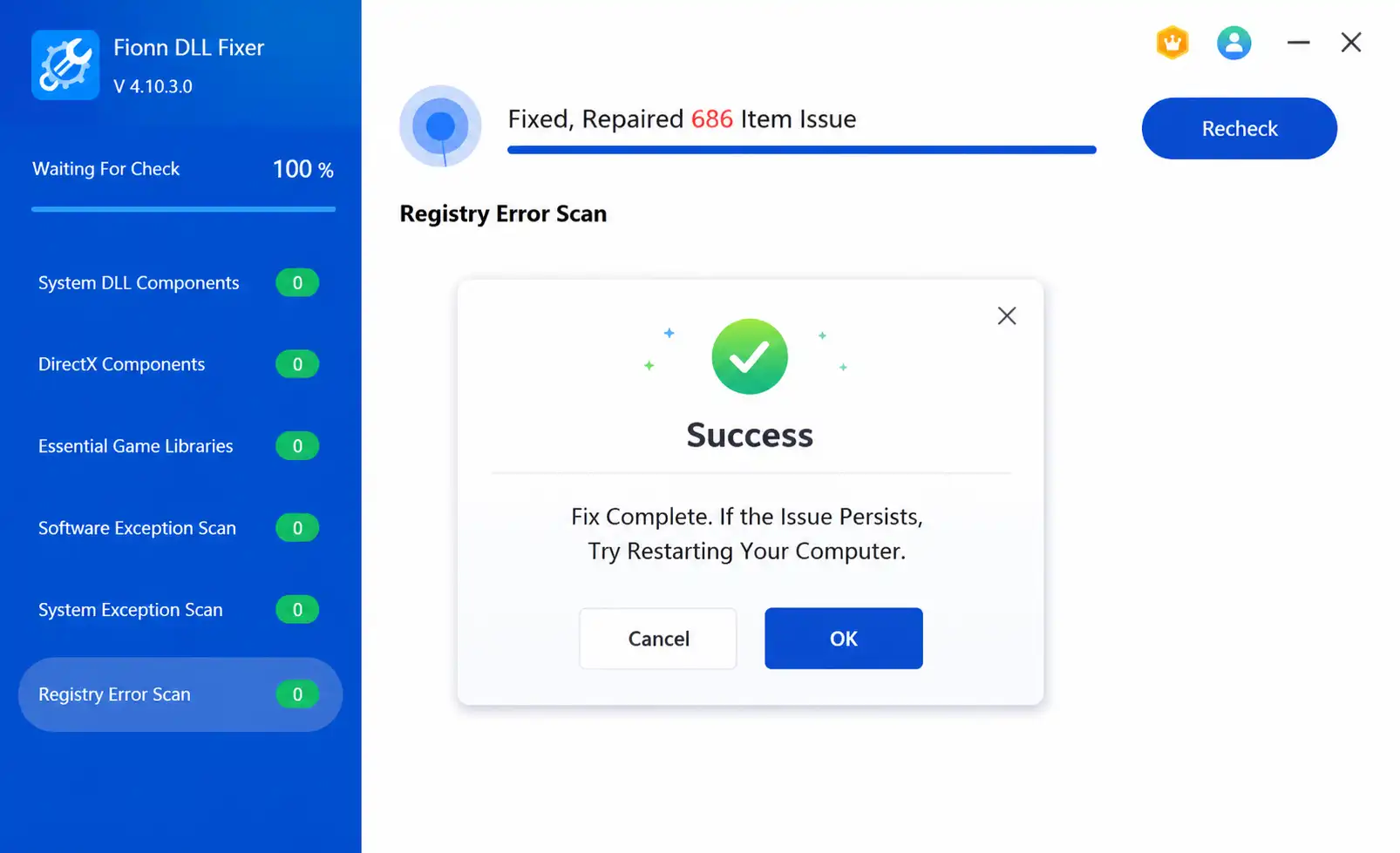
- When the repair is complete, click “Ok” in the confirmation dialog. If prompted, restart your computer before checking whether the problem has been resolved.
- If the issue still persists after restarting, click “Recheck” to perform another scan. If new issues are found, click “Repair” again to fix them.
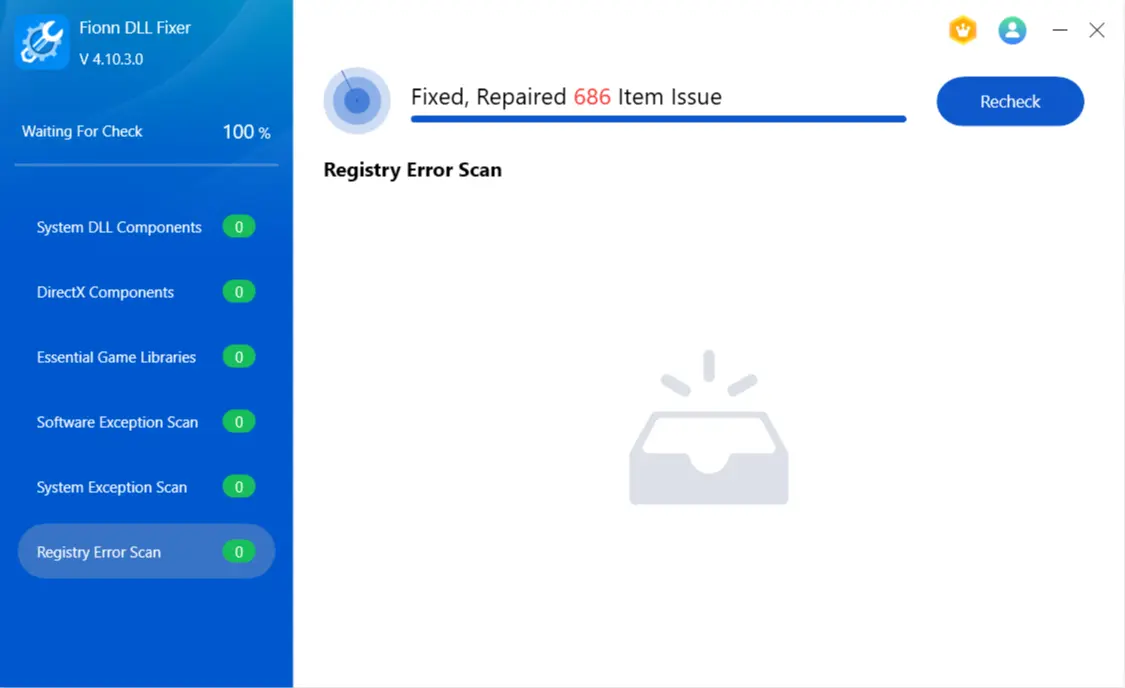
Expected result: The follow-up scan shows the relevant issue as repaired or no longer detected. The free edition displays three free attempts; VIP unlocks DLL, DX, runtime-library, and system-repair entitlements.
Tips and Common Mistakes
- Copy the filename exactly, including underscores and the
.dllextension, before searching support material. - Test the same application after every method so you know which change helped.
- If only one program fails, prioritize its repair or reinstall; a broad system change may not address an application-specific package.
- If several programs fail, record each filename and use a scan that can show errors, warnings, and normal items together.
Conclusion
For a single affected application, repair it first and reinstall it if repair does not restore startup. If several programs report DLL problems or the issue followed a Windows change, install pending Windows updates and restart. When diagnosis spans multiple components, Fionn DLL Fixer provides a practical scan, repair, and recheck workflow on Windows. Verify success by launching the original application and repeating the action that triggered the message. If d3dx9_42.dll missing remains after a recheck, preserve the exact error text and contact the application publisher or Fionn support for further diagnosis.
FAQ
What does d3dx9_42.dll missing mean?
It means the application could not load the named DLL at startup. The file may be missing, damaged, mismatched, or unavailable in the path the application checks.
Should I download d3dx9_42.dll from a random website?
No. Unverified DLL downloads may contain the wrong build or unwanted software. Use the application’s official installer, Windows maintenance, or a verified repair workflow.
Why does restarting Windows matter after a repair?
Restarting closes processes that may still hold the old component state and allows the application to load the repaired files on its next launch.
When should I use Fionn DLL Fixer?
Use it when several DLL or dependency issues appear, when the cause is unclear, or when you want scanning, automatic repair, and a post-repair recheck in one Windows workflow.
What if the error returns after repair?
Run the recheck, test the affected application again, and note any new filenames. Persistent errors may require the application publisher’s installer or support because the root cause can be specific to that program.


