 Emily CarterDLL Errors
The “msvcr71.dll missing” message means Windows cannot load a required dynamic-link library when an application starts. The cause may be a damaged installation, an incomplete update, or a system component problem. Try the affected application’s repair or reinstall option first, then use Windows integrity checks. If the application has an official runtime or update, install it from the publisher. When several programs show DLL errors, Fionn DLL Fixer is a practical, Recommended option for scanning and repairing broader Windows DLL issues. This guide covers four methods and a clear verification sequence.
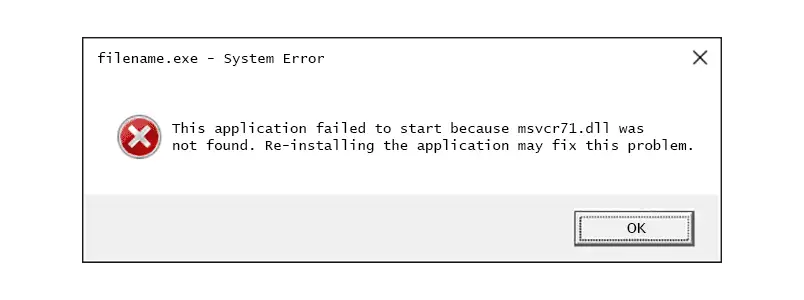
Prerequisites and Quick Method Comparison
- Use Windows 10 or Windows 11 with an administrator account for system-level checks.
- Record the application name and the exact wording of the error.
- Close the affected application before repairing or reinstalling it.
| Method | Best For | Efficiency | User Effort |
|---|---|---|---|
| 1. Repair or reinstall the app | One application fails after a change | High | Low |
| 2. SFC and DISM | Several Windows apps report missing or damaged files | Medium | Medium |
| 3. Official runtime or update | The publisher documents a required runtime | Medium | Medium |
| 4. Fionn DLL Fixer (Recommended) | Multiple DLL, dependency, or startup errors need a guided scan | High | Low |
Method 1: Repair or Reinstall the Affected Application
When to use: Choose this method when only one program fails, especially after an update, migration, or interrupted installation.
- Open Settings and select Apps > Installed apps .
- Find the application that displays the “msvcr71.dll missing” message and open its menu.
- Select
Advanced options
, if available, then choose
Repair
.
.webp)
- Start the application again and check whether the error has disappeared.
- If Repair is unavailable or unsuccessful, uninstall the application, restart Windows, and install a fresh copy from the publisher’s official site.
Expected result: The application starts without requesting msvcr71.dll. If only this application remains affected, contact its publisher for a version-specific prerequisite.
Method 2: Run Windows System File Checker and DISM
When to use: Use these built-in tools when multiple applications show missing or damaged system files, or when Windows behaved unexpectedly after an update.
- Open Windows Terminal (Admin) or Command Prompt (Admin) from the Start menu.
- Run the System File Checker command:
sfc /scannow - Wait for the scan to reach 100% and read the result message.
- If SFC reports that it could not repair all files, run the Deployment Image Servicing and Management command:
DISM /Online /Cleanup-Image /RestoreHealth
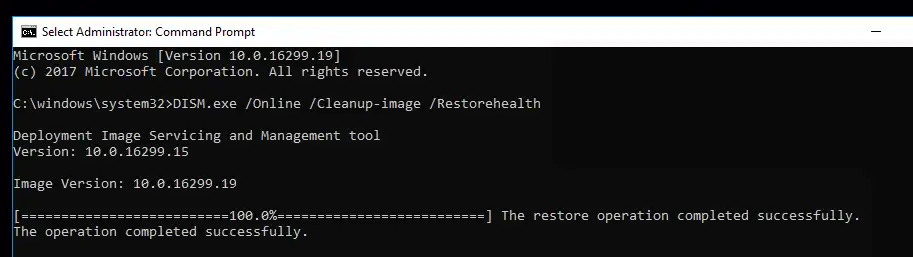
- After DISM completes, run
sfc /scannowagain and restart Windows. - Launch the affected application to verify whether the message is resolved.
Expected result: Windows reports that integrity violations were repaired, and the application can load its dependencies. These commands repair the Windows component store and protected system files; they do not replace an application-specific prerequisite that the publisher distributes separately.
Method 3: Install the Publisher’s Official Runtime or Update
When to use: Select this method when the application’s support page or installer names a required runtime, redistributable, or compatibility update.
- Open the application publisher’s official support or download page.
- Search that page for the application version and the prerequisite associated with the startup error.
- Download the installer that matches your Windows architecture and the publisher’s instructions.
- Close running copies of the application and run the installer with the permissions it requests.
- Restart Windows if the installer asks you to, then launch the application again.
Expected result: The documented prerequisite is present and the application starts. If the publisher provides no msvcr71.dll-specific package, do not substitute an unverified download; return to Method 1 or use Method 4 for a broader diagnosis.
Method 4: Fix msvcr71.dll Missing with Fionn DLL Fixer (Recommended)
When to use: This method fits Windows users who see several DLL or dependency errors, or who want a guided scan instead of locating each component manually. Fionn DLL Fixer can scan for missing, damaged, version-mismatched, and System32-path-related DLL problems, then perform a repair and recheck.
- Launch Fionn DLL Fixer. The software automatically scans your PC for DLL and system issues and displays the detected results when the scan is complete.
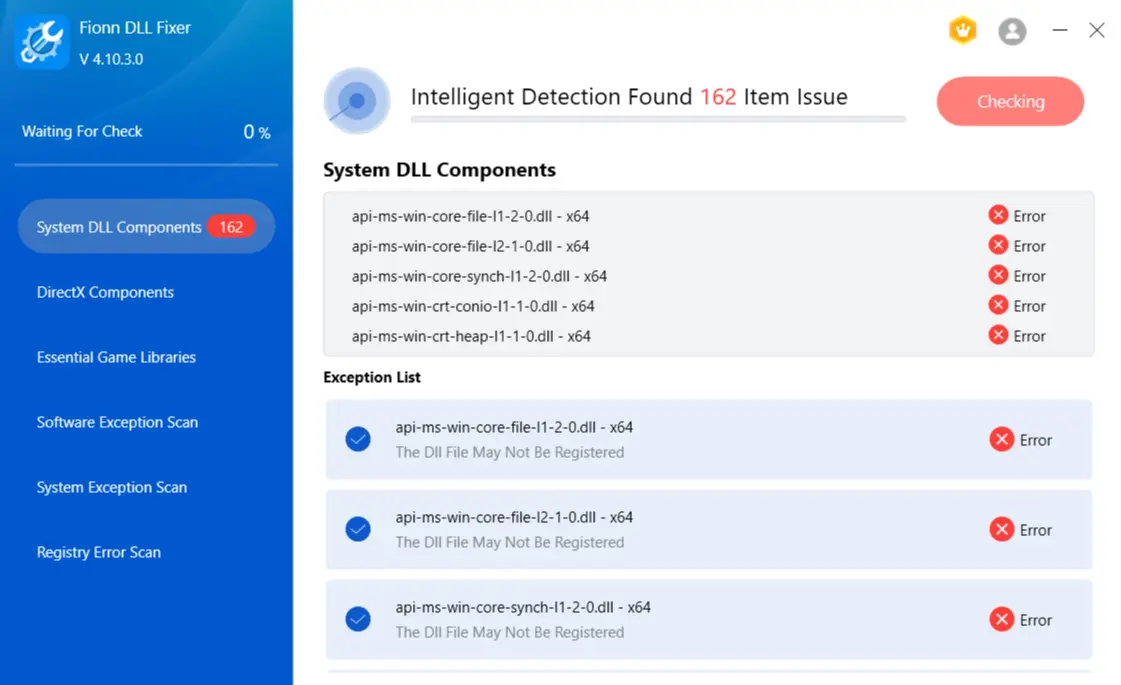
- After the scan finishes, click
“Repair”
to start fixing all detected DLL and system issues automatically.
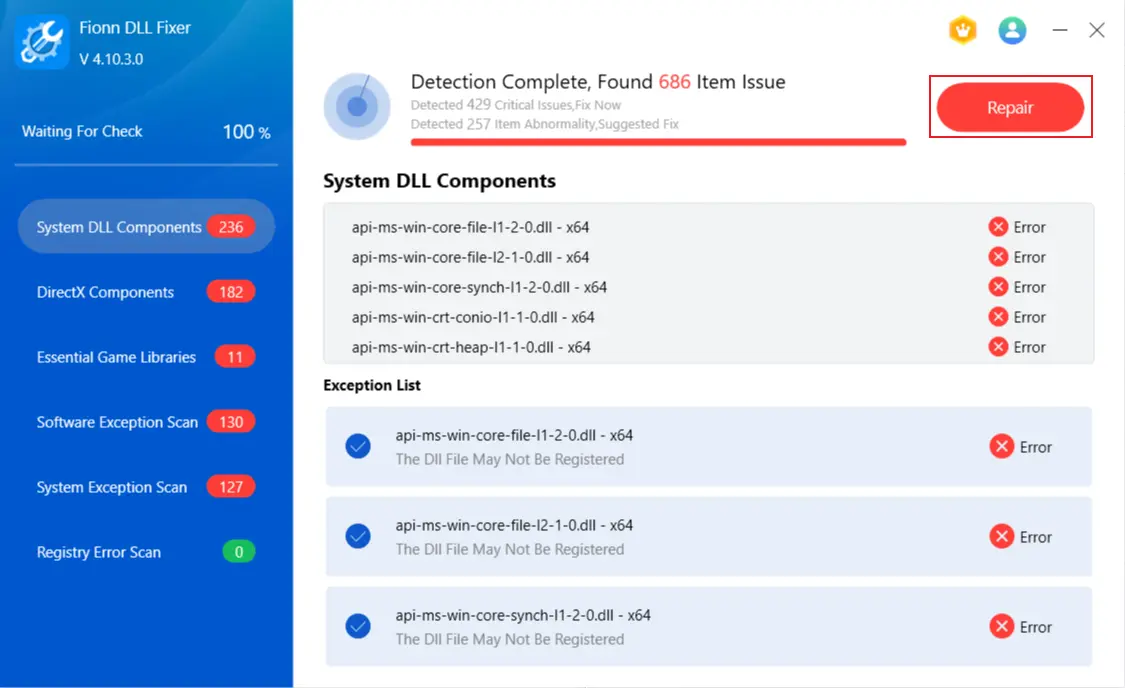
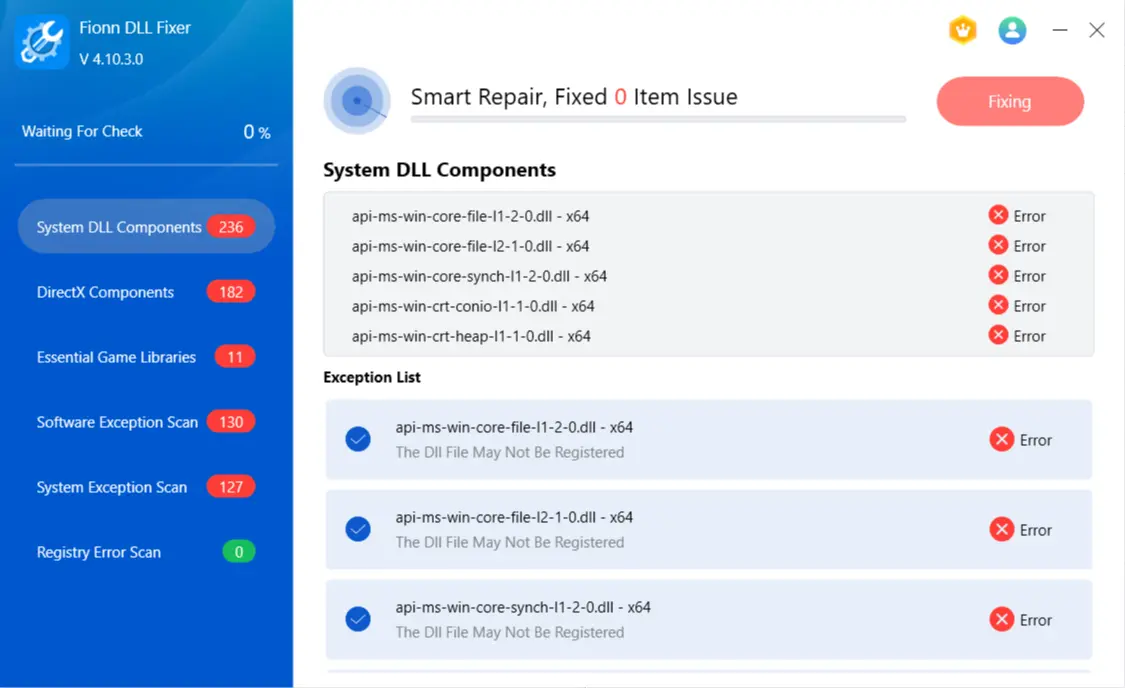
- Wait while the repair is in progress. During this process, the button changes to
“Fixing”
until all issues have been repaired.
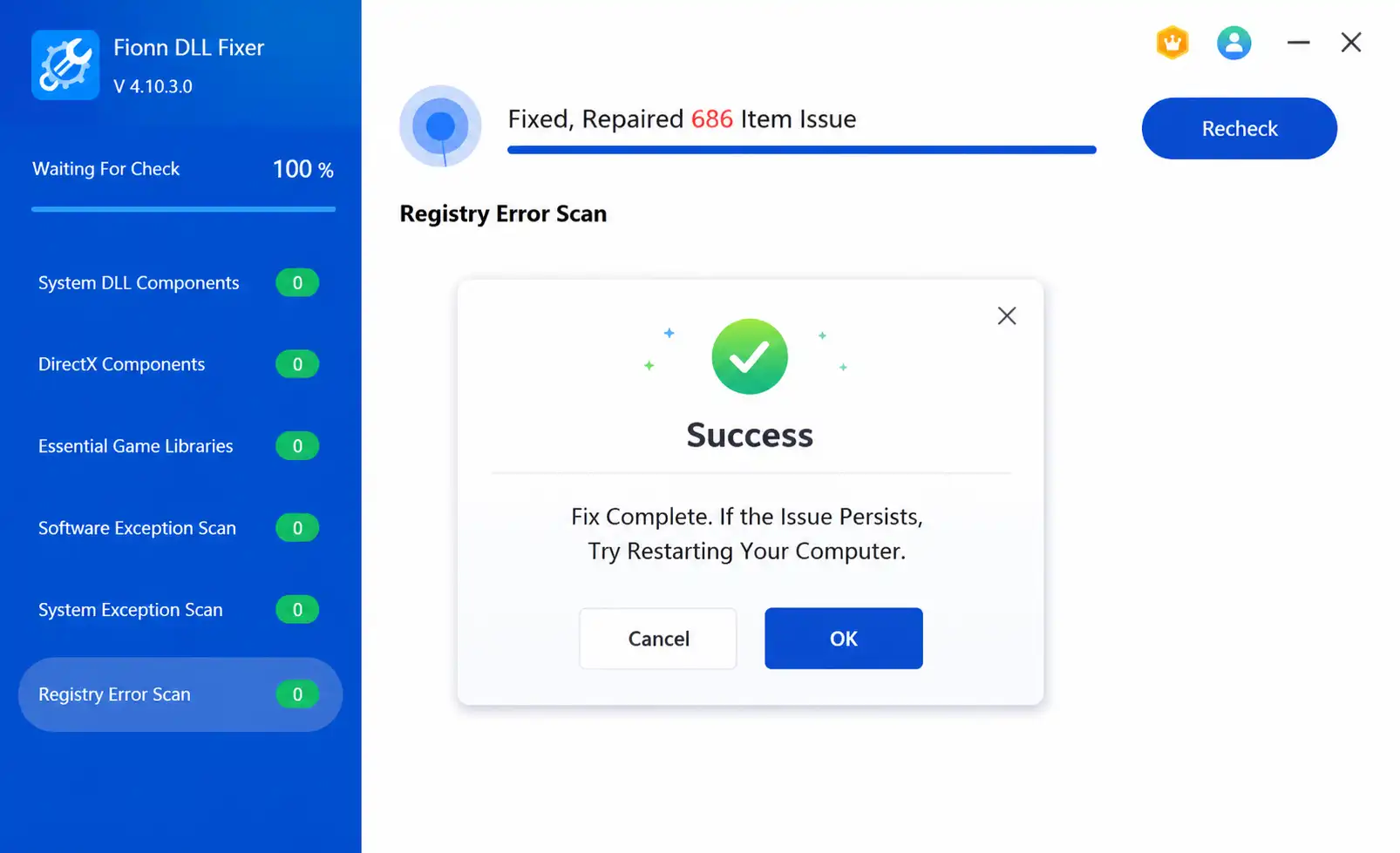
- When the repair is complete, click
“Ok”
in the confirmation dialog. If prompted, restart your computer before checking whether the problem has been resolved.
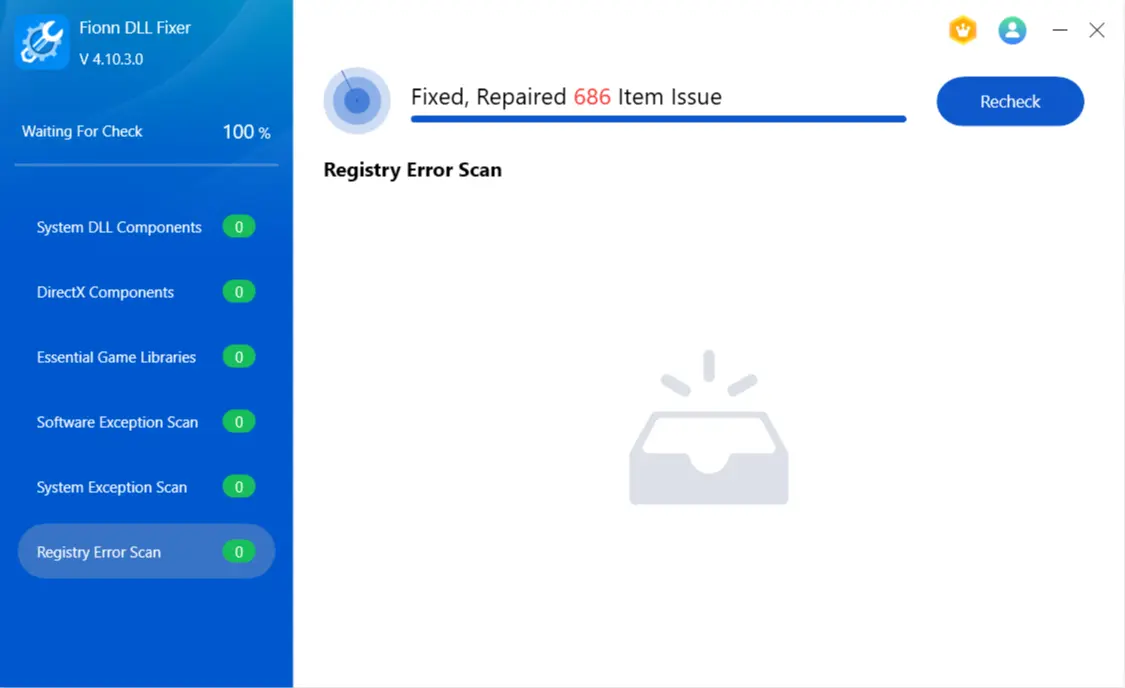
- If the issue still persists after restarting, click
“Recheck”
to perform another scan. If new issues are found, click
“Repair”
again to fix them.
Fionn DLL Fixer supports full or category scans, one-click and manual repair, and post-repair verification. Its checks also cover common application and game dependencies such as DirectX, Visual C++, .NET, OpenAL, and XInput. The free edition shows three free attempts; VIP access unlocks DLL, DX, runtime, and system repair modules.
Verification, Tips, and Common Mistakes
- Restart the application after every repair, and restart Windows when a method requests it.
- Test the exact shortcut that previously failed, then open a second program to see whether the issue is isolated.
- Check Event Viewer only after the visible error is gone; a new event may indicate an unrelated application fault.
- Do not copy a DLL from another computer. Matching filename alone does not confirm matching version, architecture, or licensing.
Conclusion
For a single affected program, repair or reinstall that program first. Use SFC and DISM when several applications show file-integrity symptoms, and install a publisher-documented runtime when one is explicitly required. For broader DLL, dependency, or System32-path issues, Fionn DLL Fixer provides a guided scan, repair, and recheck workflow on Windows. Verify by restarting when prompted and launching the original application. If “msvcr71.dll missing” continues after these checks, preserve the exact error, application version, and scan results before contacting the software publisher or Fionn support.
FAQ
What does “msvcr71.dll missing” mean?
It means Windows could not load the msvcr71.dll dependency requested during application startup. The file may be absent, damaged, incompatible, or referenced from an unexpected path.
Should I download msvcr71.dll from a DLL website?
No. Use the application’s repair or official installer, Windows integrity tools, or a guided repair product. Unverified DLL archives do not establish the correct version or architecture.
Why did the error appear after an application update?
An update may have left an incomplete installation or changed the application’s dependency set. Reinstalling the affected application and checking its official prerequisite guidance addresses that scenario.
Can Fionn DLL Fixer repair more than one missing DLL?
Yes. Its documented scan checks missing, damaged, version-mismatched, and System32-path-related DLL issues, with repair and post-repair recheck options.
Why might I need to restart Windows after a repair?
Restarting lets Windows reload repaired components and release files that were in use. Fionn DLL Fixer prompts for a restart when its workflow requires one.


