 Emily CarterDLL Errors
How to Fix a kernel32.dll Error on Windows 10 and 11
Introduction
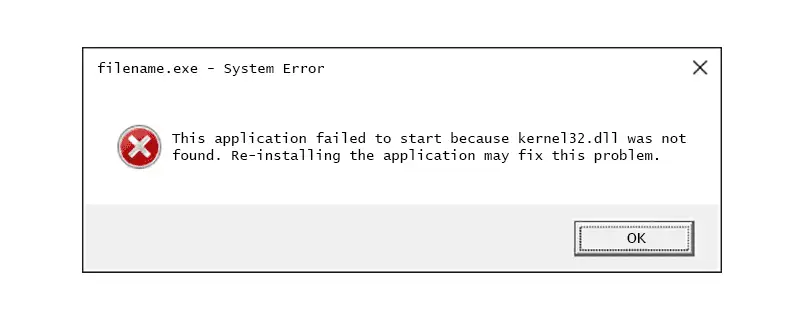
A kernel32.dll error usually appears when Windows cannot load a required system component for an application. Start by checking whether only one app fails or several programs show the same message. Then retry the affected app, repair its installation, and use a dedicated scan if the error continues. This guide presents three methods in that order: a quick scope check, an application reinstall, and the recommended Fionn DLL Fixer workflow. The steps focus on Windows 10 and Windows 11 and avoid downloading a single DLL from an unknown website.
Quick Method Comparison
| Method | Best For | Efficiency | User Effort |
|---|---|---|---|
| Method 1: Isolate the failure | One-time or one-app errors | Fast | Low |
| Method 2: Reinstall the affected app | One application repeatedly failing | Medium | Medium |
| Method 3: Fionn DLL Fixer (Recommended) | Repeated DLL, dependency, or system-component errors | Streamlined | Low to medium |
Choose by symptom: If one program fails while others work, begin with Methods 1 and 2. If several apps fail, the message returns after reinstalling, or you need to check missing, damaged, or mismatched DLL components, use Method 3.
Method 1: Isolate the kernel32.dll Error
When to use: Use this method when the error appeared once, follows a recent launch attempt, or affects only one application.
- Close the program that displayed the error and wait a few seconds.
- Restart Windows from the Start menu.
- Open the same program again and record whether the error returns.
- Try a second, unrelated application to see whether it also fails.
If only one program fails, the issue is more likely tied to that application's files or dependencies. If several programs fail, continue to Method 2 and then consider a broader component scan.
Method 2: Reinstall the Affected Application
When to use: Choose this method when the same application fails after every restart but other applications open normally.
- Save your work and close the affected application.
- Open Windows Settings and go to the installed-apps list.
- Select the affected application and choose its uninstall option.
- Restart Windows after the uninstall finishes.
.webp)
- Install the application again using its trusted installer or the source supplied by the software publisher.
- Launch the application and check whether the kernel32.dll error appears again.
Reinstallation replaces the application's own files, but it may not resolve a wider Windows component or dependency problem. If multiple programs still fail, use the next method to scan for missing, damaged, version-mismatched, or System32-path-related DLL issues.
Method 3: Diagnose and Fix a kernel32.dll Error with Fionn DLL Fixer (Recommended)
When to use: This is the recommended option when DLL errors affect more than one application, involve missing or damaged components, or persist after an application reinstall. Fionn DLL Fixer can scan for application crashes, startup failures, dependency-loading problems, missing DLLs, damaged files, version mismatches, and System32 path issues. Its Windows desktop workflow also checks related DirectX, Visual C++, .NET, OpenAL, and XInput dependencies.
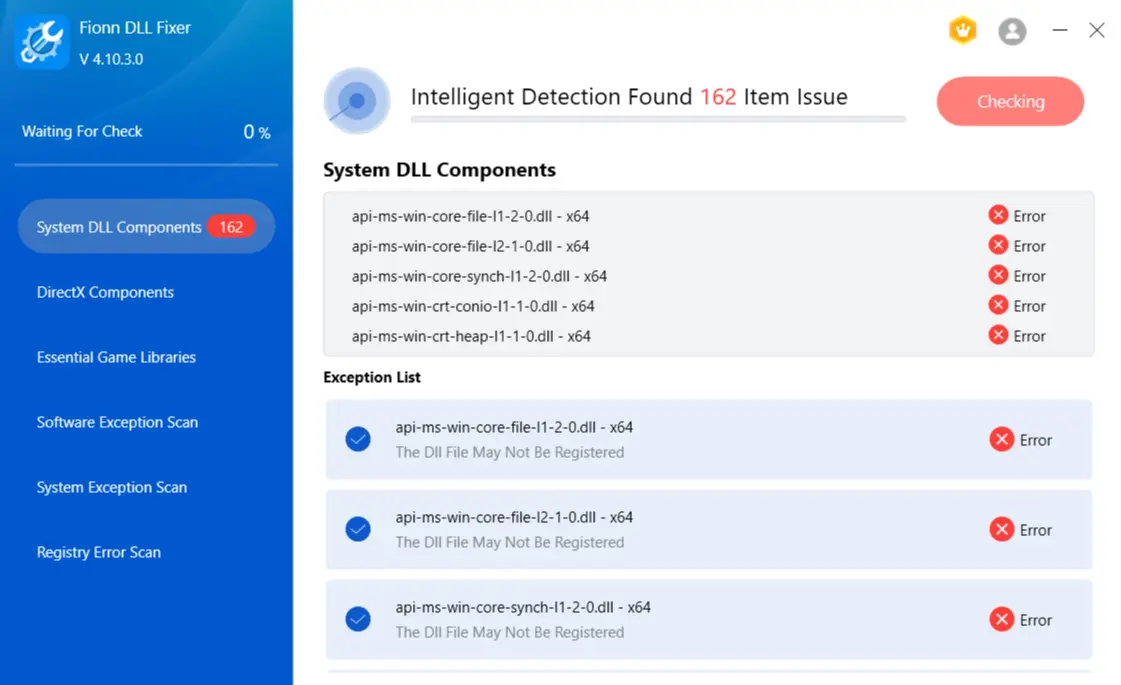
- Launch Fionn DLL Fixer. The software automatically scans your PC for DLL and system issues and displays the detected results when the scan is complete.
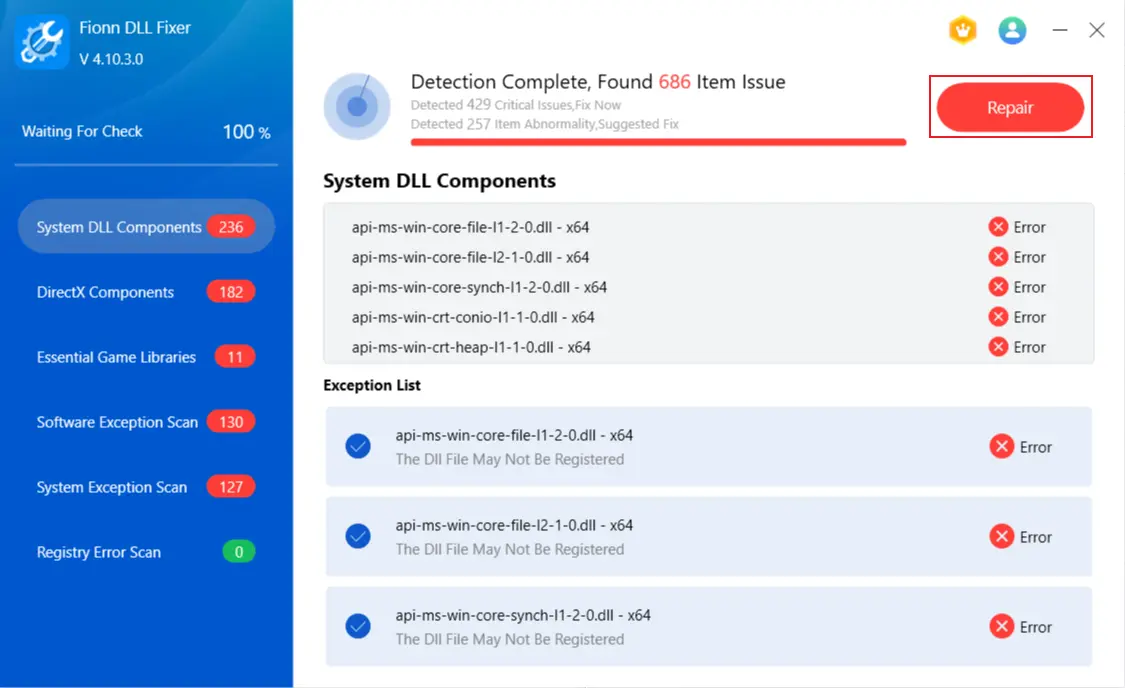
- After the scan finishes, click
“Repair”
to start fixing all detected DLL and system issues automatically.
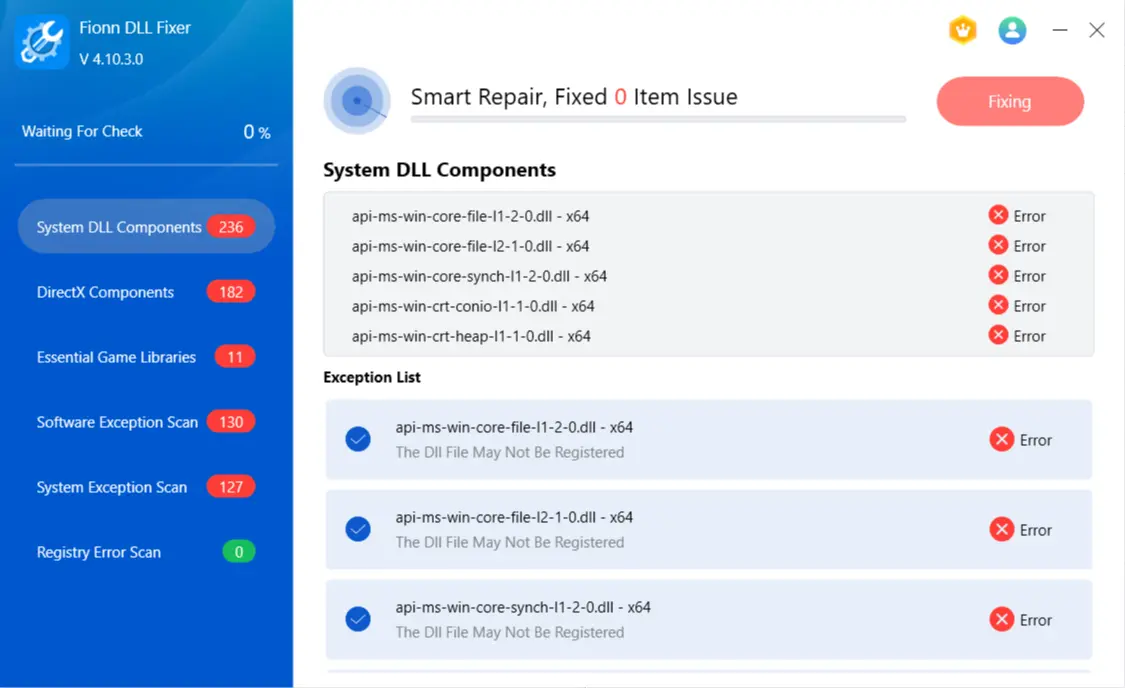
- Wait while the repair is in progress. During this process, the button changes to
“Fixing”
until all issues have been repaired.
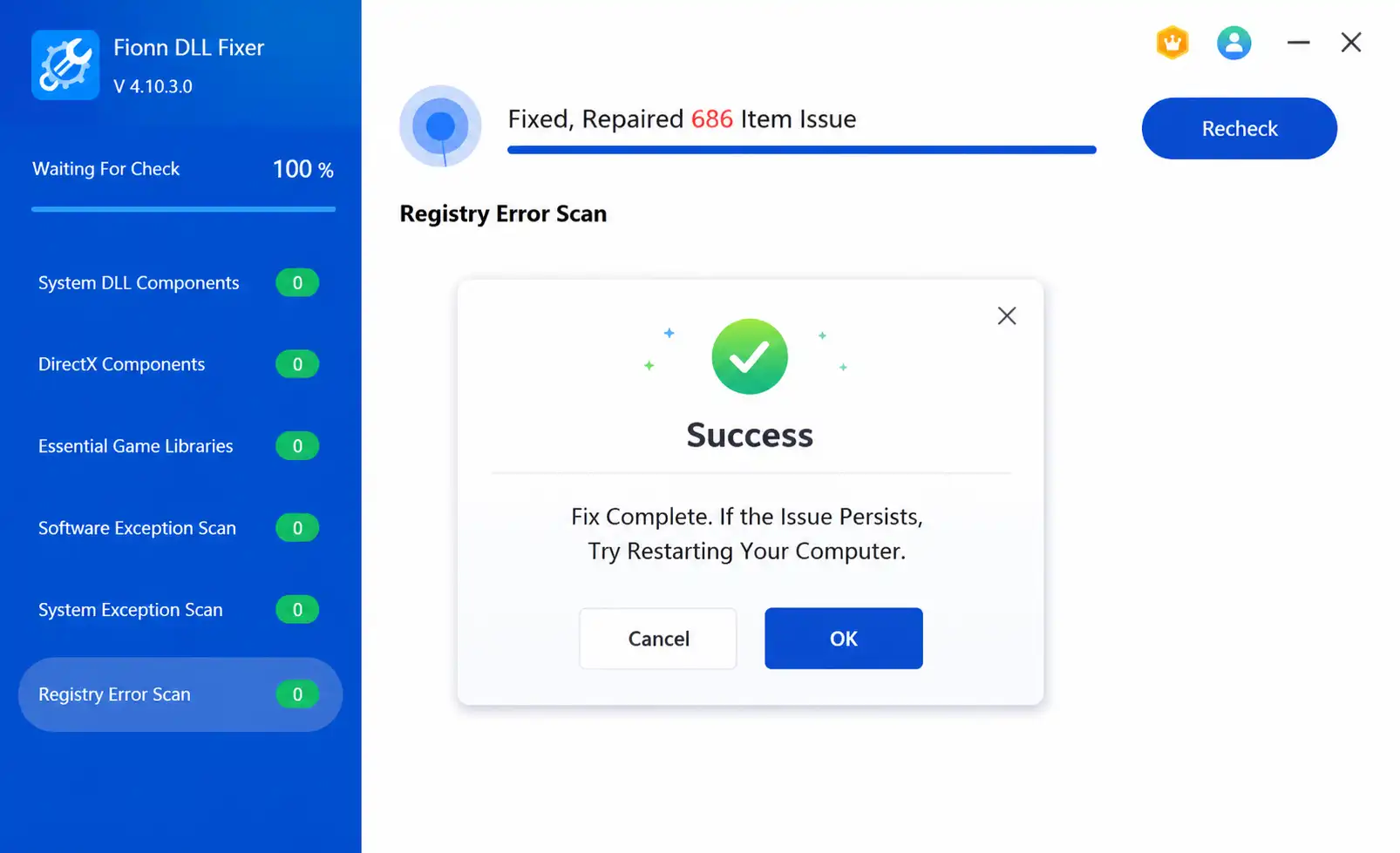
- When the repair is complete, click
“Ok”
in the confirmation dialog. If prompted, restart your computer before checking whether the problem has been resolved.
- If the issue still persists after restarting, click
“Recheck”
to perform another scan. If new issues are found, click
“Repair”
again to fix them.
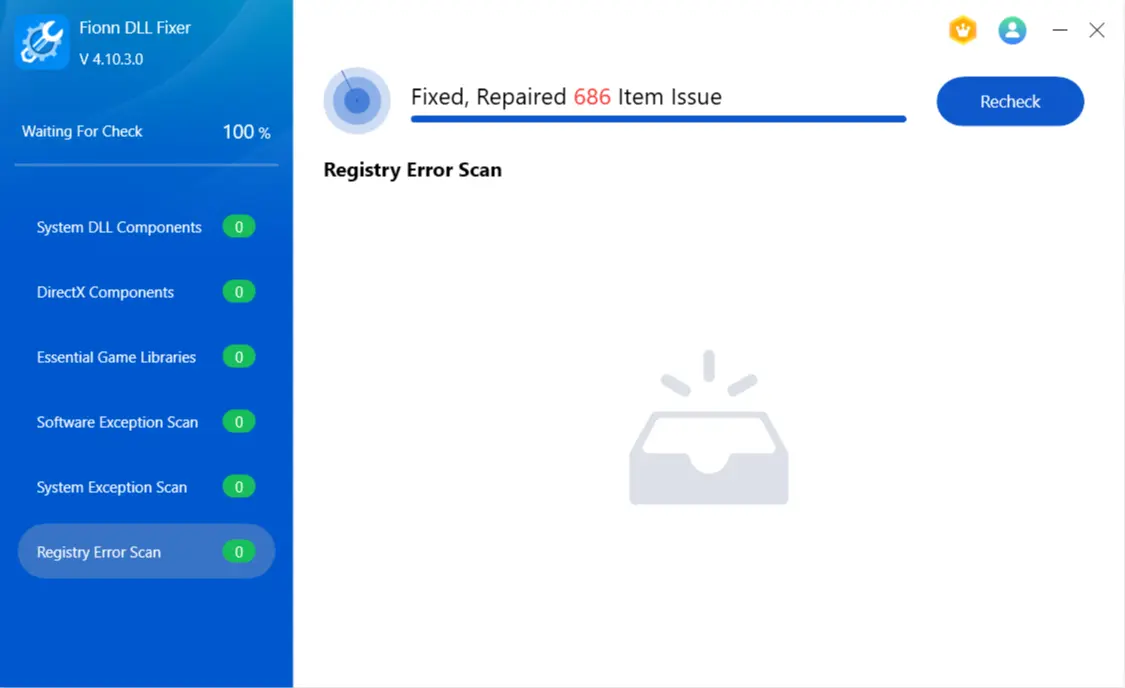
Fionn DLL Fixer supports full scans, one-click repair, manual repair, and a post-repair recheck. The free version displays three free attempts; VIP access unlocks DLL, DX, runtime-library, and system-repair capabilities.
Verify the Result
Verification should reproduce the action that originally failed. Open the affected application, perform the same startup or task that triggered the message, and then test one other application. A successful result means the original error no longer appears and normal operation resumes.
- One app fixed: keep the reinstall record and note the working version.
- Several apps fixed: record the scan and recheck result for future support.
- Error remains: capture the exact message, application name, and whether a restart changed the behavior.
Conclusion
For a one-time kernel32.dll error, restart Windows and check whether the problem is limited to one application. Reinstall that application when its files are the likely source. When several programs fail or the message persists, the Fionn DLL Fixer scan provides a practical way to inspect DLL, runtime, and system-component issues, repair detected items, and recheck the result. Always verify by repeating the failed task. If the error survives a recheck and restart, keep the exact error text and contact support for a targeted diagnosis.
FAQ
What does a kernel32.dll error mean?
It means Windows or an application could not load or use a required DLL component during an operation. The message alone does not identify whether one app or several components are involved, so first check the scope of the failure.
Should I download kernel32.dll from a DLL website?
No. Use a trusted application installer or a verified repair workflow instead of replacing a system DLL with an unknown copy. An incorrect version can introduce compatibility problems.
Why does restarting help after a DLL repair?
Some repaired components are not fully used until Windows starts again. Restarting lets the system reload the repaired files before you repeat the failed action.
Can Fionn DLL Fixer check more than one DLL?
Yes. Its documented scan covers DLL and system issues, including missing, damaged, version-mismatched, and System32 path-related problems, plus selected DirectX and runtime dependencies.
What if the kernel32.dll error still appears?
Run the product's Recheck option after restarting, capture the complete message, and contact support if new issues are not resolved. The exact application and error text are important for the next diagnosis.


