 Emily CarterDLL Errors
How to Fix msvcp140.dll Missing or Not Found on Windows 10/11
Introduction
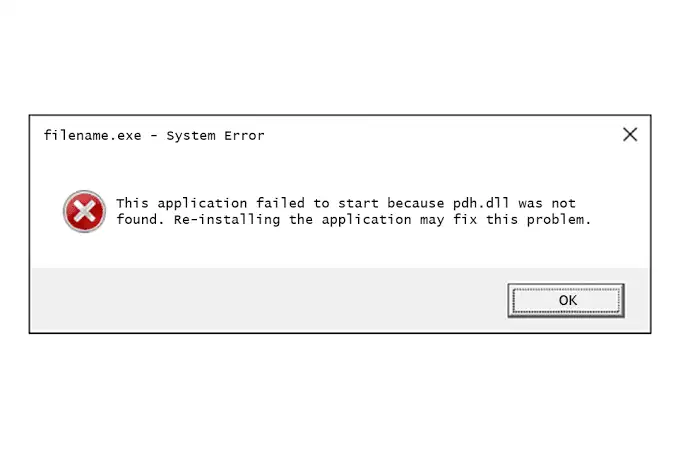
An msvcp140.dll error means an application cannot load the runtime library it expects. The safest response is to repair the affected application or restore the library through Microsoft's official Visual C++ Redistributable package. Three methods are covered below. Start with Method 1 when only one application fails. Go directly to Method 2 when several applications show the same error. Use the optional assisted scan in Method 3 only if the official and application-specific repairs do not resolve the problem.
Quick Overview
The error message alone does not reveal whether the application, its runtime package, or a broader dependency is damaged. The number of affected applications provides a more useful starting point.
| Observed situation | Best starting method | Why it fits |
|---|---|---|
| Only one application fails | Repair or reinstall that application | Its installation or bundled prerequisites may be incomplete. |
| Several applications report msvcp140.dll | Repair the Microsoft runtime package | The shared Visual C++ libraries may be missing or damaged. |
| Errors persist or involve several dependencies | Run an optional assisted scan | A broader scan can identify additional missing, damaged, or mismatched components. |
Method 1: Repair the Application Reporting the Error
When to Use
Choose this method when one application or game reports that msvcp140.dll is missing, while other programs open normally. A damaged application installation may fail to deploy or locate its required components. Windows provides repair options for supported applications, although not every program exposes them.
Step-by-Step Guide
- Close the application displaying the error.
- Open
Start > Settings > Apps > Installed appsin Windows 11, orStart > Settings > Apps > Apps & featuresin Windows 10. - Select the application's menu and open
Advanced options, if available.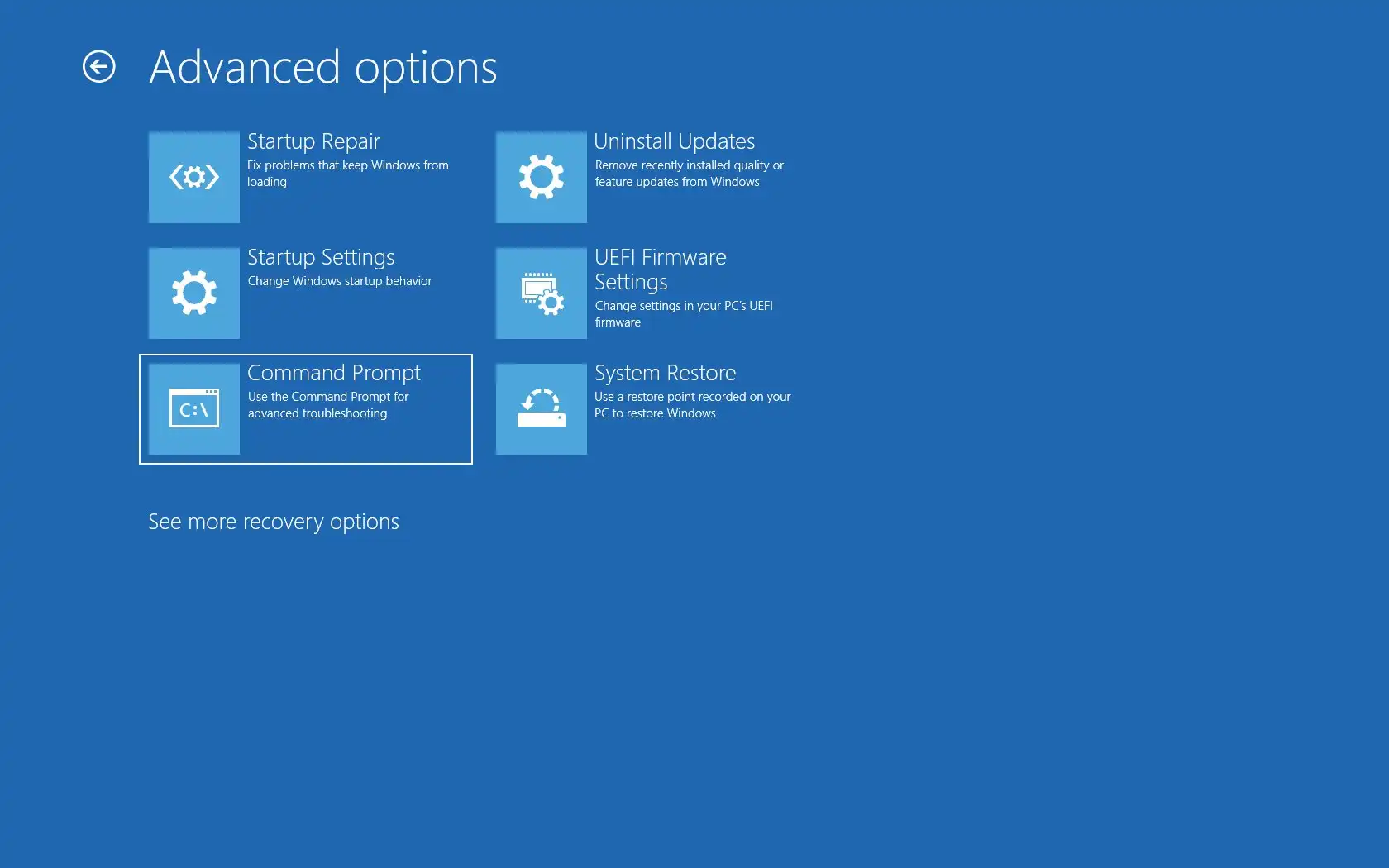
- Select
Repairand wait for Windows to finish. - Open
Control Panel > Programs > Programs and Featuresif Settings does not offer a repair option. - Select the program, choose
RepairorChange, and follow its installer prompts. - Reinstall the application from its official publisher if neither repair route is available.
These paths follow Microsoft's official instructions for repairing apps and programs in Windows .
How to Verify
Restart the application and repeat the action that triggered the message. The method worked if the application opens without an msvcp140.dll dialog. If the same error appears, keep the application closed and continue to Method 2.
Method 2: Restore msvcp140.dll with the Official Microsoft Runtime
When to Use
Use this method when the error explicitly names msvcp140.dll, application repair failed, or multiple programs have similar launch errors. Microsoft distributes the Visual C++ libraries through architecture-specific Redistributable packages. Installing the supported package restores the library set as a managed component instead of treating one DLL in isolation.
Step-by-Step Guide
- Close running applications and save your work.
- Open Microsoft's latest supported Visual C++ Redistributable downloads page.
- Download
vc_redist.x86.exefor a 32-bit application orvc_redist.x64.exefor a 64-bit application on standard Intel or AMD Windows. - Run the downloaded installer and approve the Windows User Account Control prompt.
- Select
Install, or selectRepairwhen an installed package offers that option. - Repeat the process for the other application architecture when both 32-bit and 64-bit programs need the runtime.
- Restart Windows if the installer requests it.
How to Verify
Launch each previously affected application. Successful launches without the missing-file message confirm that the runtime repair worked. If the Redistributable installer fails, Microsoft stores diagnostic logs in
%TEMP%
; relevant filenames begin with
dd_vcredist_
. Record the displayed error code and review those logs before changing other system components.
If the runtime installs successfully but only one application still fails, reinstall that application from its publisher. If several dependency errors remain, an assisted scan can provide a broader inventory.
Method 3: Use Fionn DLL Fixer for an Assisted Scan
When to Use
This optional method suits persistent launch failures or cases involving several missing, damaged, or version-mismatched DLL and runtime components. The tool scans Windows application crashes, startup failures, and dependency-loading problems. It should follow the official Microsoft and application repair options rather than replace them.
Step-by-Step Guide
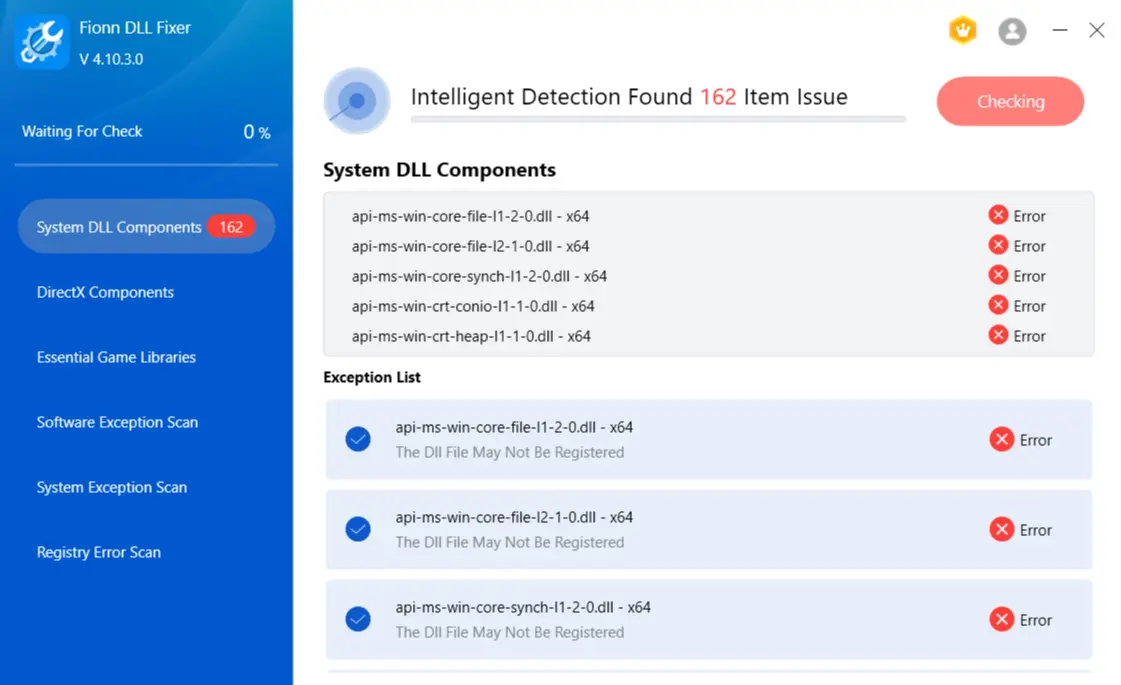
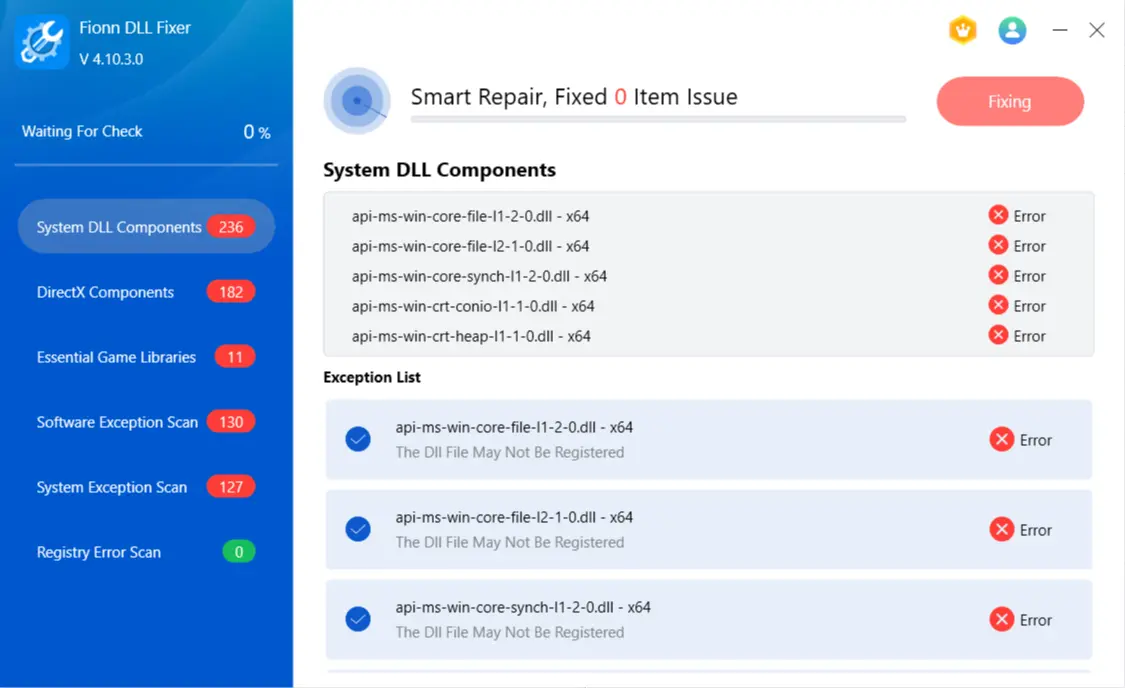
- Launch Fionn DLL Fixer. The software automatically scans your PC for DLL and system issues and displays the detected results when the scan is complete.
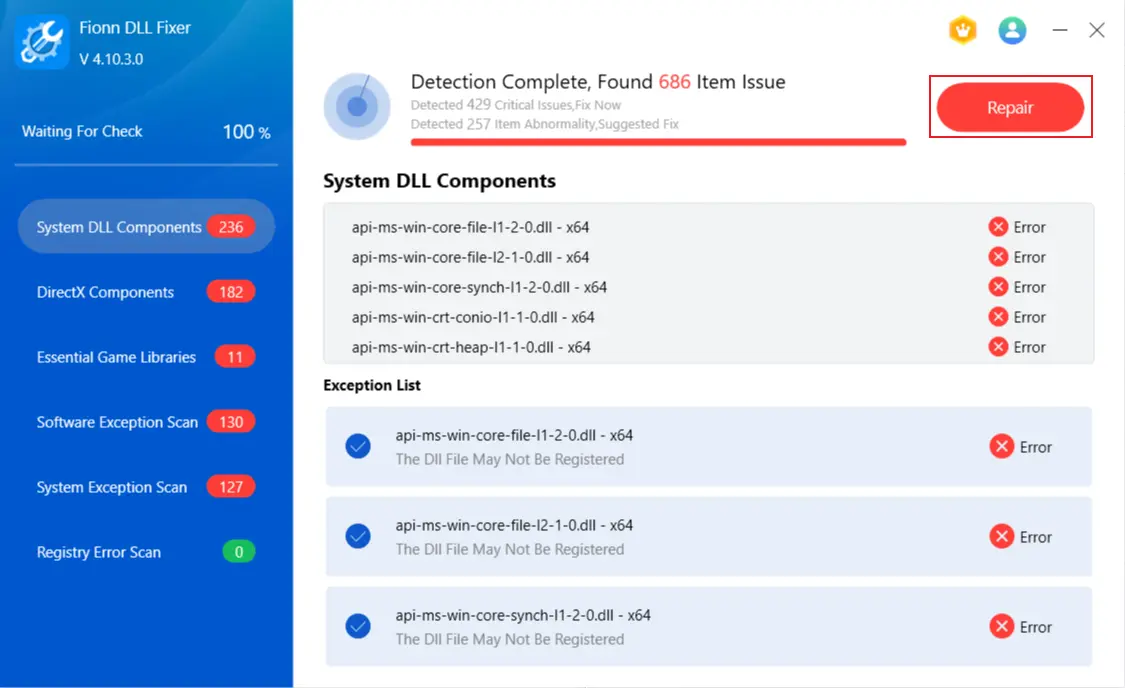
- After the scan finishes, click “Repair” to start fixing all detected DLL and system issues automatically.
- Wait while the repair is in progress. During this process, the button changes to “Fixing” until all issues have been repaired.
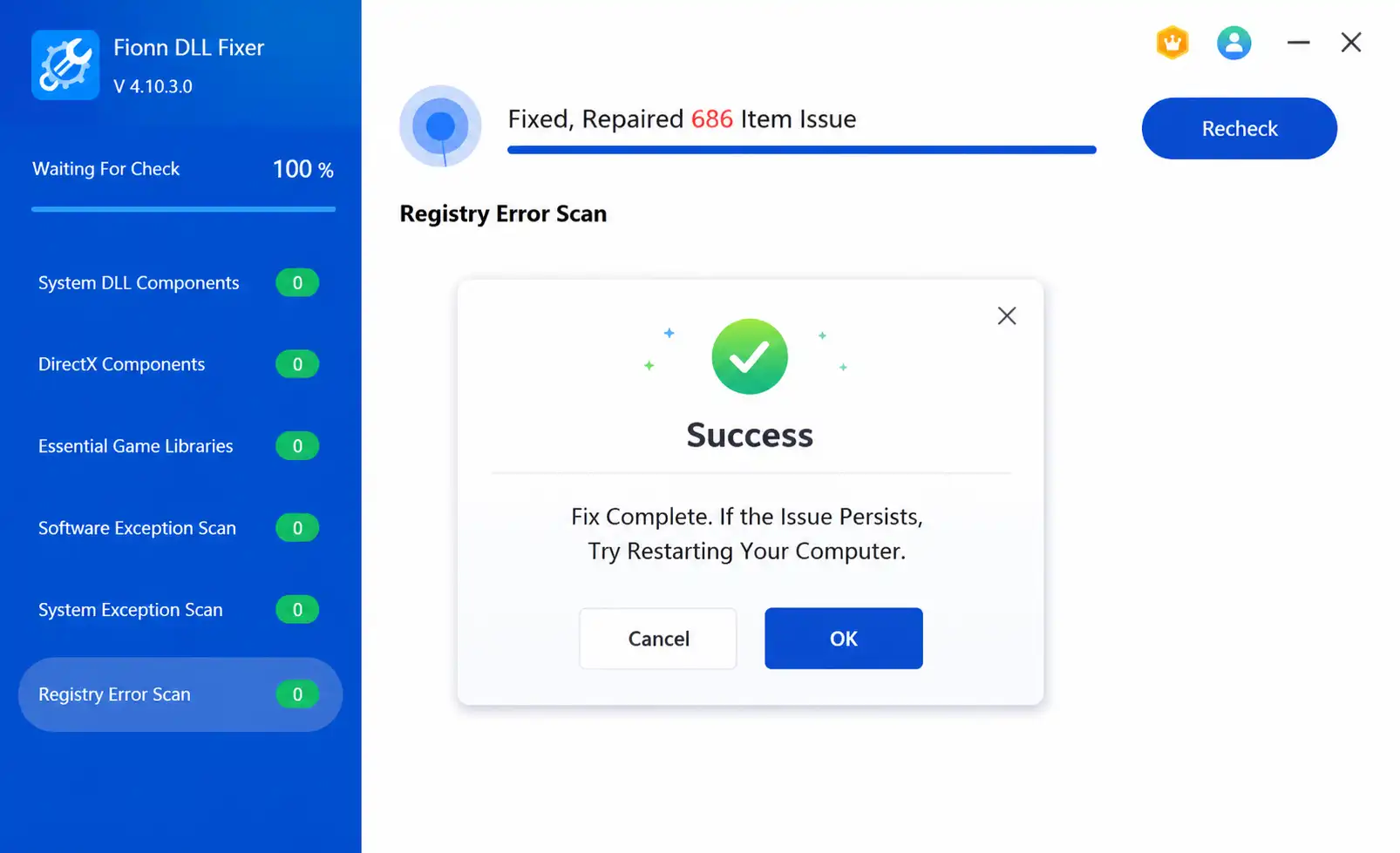
- When the repair is complete, click “Ok” in the confirmation dialog. If prompted, restart your computer before checking whether the problem has been resolved.
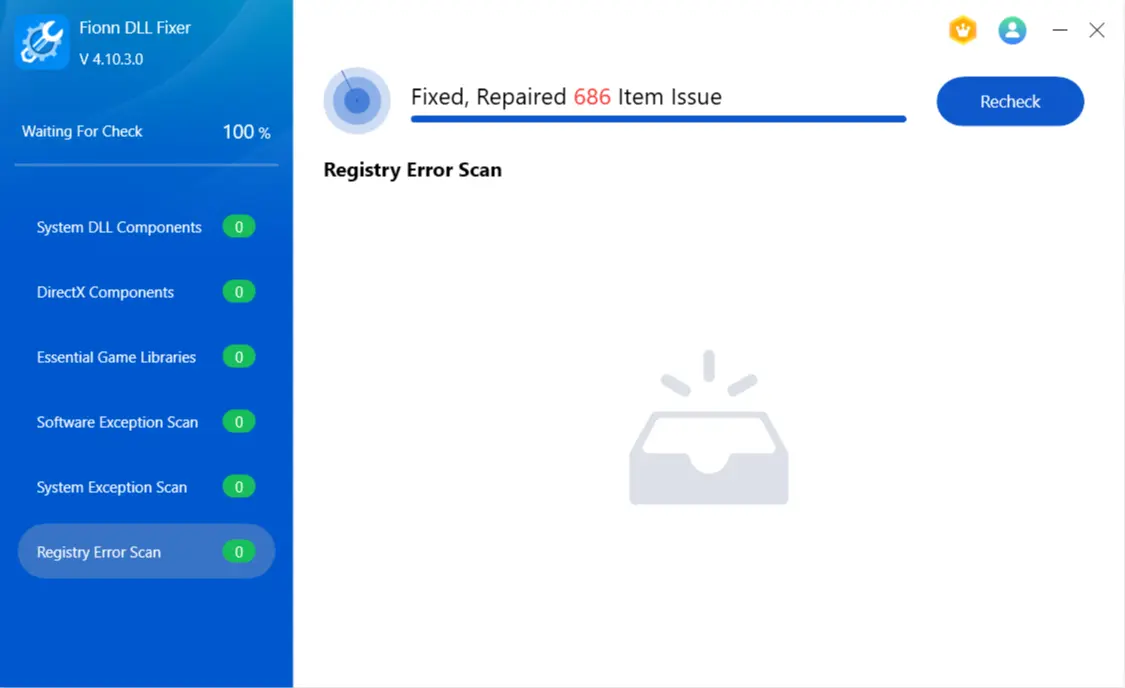
- If the issue still persists after restarting, click “Recheck” to perform another scan. If new issues are found, click “Repair” again to fix them.
How to Verify
Complete the recheck, then launch the application that produced the original message. Verification requires both a clean or improved scan result and a successful application launch. If the error remains, preserve its exact wording and contact the application's publisher or product support rather than repeatedly replacing individual files.
Common Mistakes to Avoid
- Downloading one DLL from an unofficial library: the file may be unsafe, outdated, or built for the wrong architecture.
- Copying a DLL into random folders: this can hide the original deployment problem and cause a different version conflict.
- Choosing a package only by the PC architecture: a 32-bit application can still need the x86 runtime on 64-bit Windows.
- Skipping verification: always relaunch the affected application after each method so you know which change resolved the error.
Conclusion
Repair the affected application first when the failure is isolated. Install or repair Microsoft's current Visual C++ Redistributable when the message explicitly names msvcp140.dll or affects several programs. Verify every method by reopening the affected software and reproducing the original action. For unresolved or broader dependency problems, an assisted recheck with Fionn DLL Fixer is an optional next step. If the error persists afterward, provide the application publisher with the exact message, application architecture, and any Redistributable installer error code.
FAQ
What is msvcp140.dll?
msvcp140.dll is a runtime library that applications built with compatible Microsoft C++ tools may need to start. Microsoft deploys Visual C++ libraries through supported Redistributable packages. A missing-file message means the application could not load the library it expected; it does not prove that downloading one loose DLL is the correct repair.
Is it safe to download msvcp140.dll from a DLL website?
No third-party DLL download is recommended here. A loose file may have an unknown source, incompatible version, or wrong architecture. Use Microsoft's signed Visual C++ Redistributable package or repair the affected application. These routes restore managed components and provide a clearer installation record.
Do I need both x86 and x64 Visual C++ packages?
You may need both on 64-bit Windows because installed applications can use different architectures. The x86 package supplies 32-bit libraries, while the x64 package supplies 64-bit libraries. Install only official Microsoft packages and use the current Windows on Arm guidance when applicable.
Why does the error continue when msvcp140.dll is already present?
The application may be loading a different copy, expecting another architecture or version, or encountering a damaged dependency. Avoid moving the existing file. Repair the application's installation, then repair the correct Visual C++ Redistributable package and retest the same launch action.
Should I use System File Checker first?
Not usually for an isolated msvcp140.dll message. Microsoft describes System File Checker as a tool for protected Windows resources, while Visual C++ libraries are deployed through Redistributable packages. Application repair and the official runtime installer are therefore the more targeted first steps for this error.


